
Understanding how to get square feet is fundamental, whether you’re a homeowner planning a renovation, a real estate professional assessing property value, or simply curious about the space you occupy. This seemingly straightforward concept unlocks a wealth of practical applications, from determining material needs to accurately estimating property worth. The ability to calculate area with precision is a skill that transcends industries, impacting everything from interior design to construction projects.
This guide delves into the core principles of square footage calculations, starting with the basics of rectangular spaces and progressing to more complex irregular shapes. We’ll explore the tools and techniques that streamline the measurement process, ensuring accuracy and efficiency. Furthermore, we’ll examine the crucial role square footage plays in property valuation and the potential consequences of inaccurate calculations, equipping you with the knowledge to navigate these scenarios confidently.
Determining the area of a rectangular space involves simple measurements and calculations
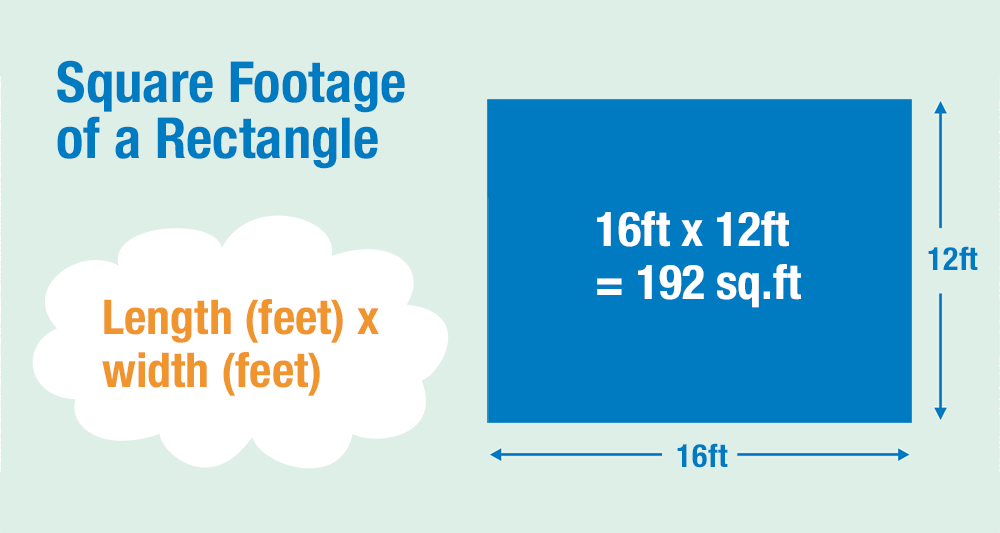
Understanding how to calculate square footage is a fundamental skill for homeowners, renters, and anyone involved in real estate or construction. Whether you’re planning a renovation, buying furniture, or assessing property value, knowing how to determine the area of a space is crucial. This guide provides a clear and concise explanation of the process, ensuring accuracy and efficiency in your measurements.
Calculating Square Footage of Rectangular Rooms
The square footage of a rectangular room is determined by a straightforward formula: multiplying the length of the room by its width. This calculation provides the total area of the floor space.
To measure accurately, begin by gathering the necessary tools. You’ll need a measuring tape, preferably a retractable one, and a notepad or a digital device to record your measurements. A laser distance meter can also be used for convenience, especially in larger spaces.
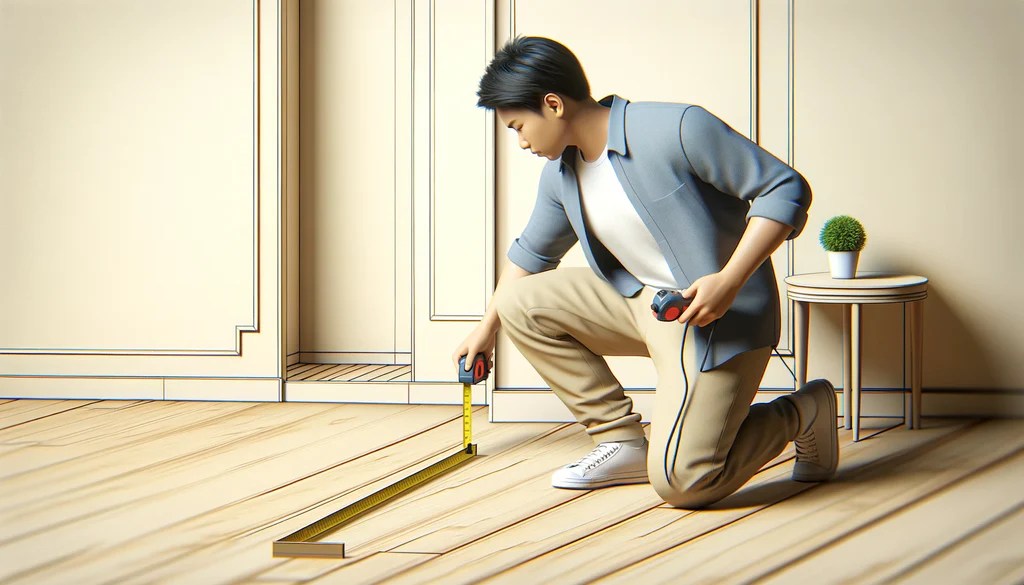
Measure the length of the room by extending the measuring tape along one of the longest walls. Ensure the tape is straight and parallel to the wall. Record the measurement in feet (or inches, which you will then convert to feet). Next, measure the width of the room, extending the tape along the adjacent wall, perpendicular to the length measurement. Again, ensure the tape is straight and parallel to the wall. Record the width in feet.
Once you have the length and width measurements, apply the following formula:
Square Footage = Length x Width
For example, if a room is 15 feet long and 12 feet wide, the calculation would be: 15 feet x 12 feet = 180 square feet. This means the room has a total area of 180 square feet. Remember to always double-check your measurements and calculations to avoid errors.
Handling Non-Rectangular Rooms
Rooms rarely conform to perfect rectangles. Irregular shapes require a slightly more involved approach, but the principle remains the same: break down the space into simpler, measurable shapes.
Here’s how to handle rooms that aren’t perfectly rectangular:
- L-Shaped Rooms: Divide the L-shape into two rectangles. Measure the length and width of each rectangle separately. Calculate the square footage of each rectangle and then add the two areas together to find the total square footage.
- Rooms with Alcoves: Treat the alcove as a separate rectangle. Measure its length and width. Calculate the alcove’s square footage and add it to the main room’s square footage.
- Rooms with Protrusions: If a room has a small protrusion (like a chimney breast), measure the main rectangular area and then subtract the area of the protrusion from the total.
- Rooms with Angles: For rooms with angled walls, it’s often best to approximate the shape by breaking it down into rectangles and triangles. Measure the necessary dimensions for each shape, calculate their individual areas, and sum them.
This method ensures a comprehensive assessment of the room’s area, regardless of its shape. Accurate measurements are essential for any successful calculation.
Visual Illustration of Measurement Process
Imagine a rectangular living room. The room is 20 feet long and 15 feet wide. To calculate the square footage, you would use a measuring tape to measure both the length and the width.
The illustration depicts a person standing in the room, holding a retractable measuring tape. The tape is extended along one of the longer walls, reaching from one end of the wall to the other. The person is carefully noting the measurement, which reads 20 feet. Next, the person turns and extends the measuring tape along the adjacent wall, measuring the width. The tape is again extended along the wall, showing a measurement of 15 feet. The measuring tape is clearly visible, and the person is looking at the measurement on the tape. The floor plan also shows the two walls being measured. The walls are clearly labeled as length and width, with the corresponding measurements. The tools used are a measuring tape and a notepad for recording the measurement. The points being measured are the longest and shortest sides of the rectangular room. The process demonstrates how to accurately measure the length and width, providing the necessary data for the square footage calculation.
Calculating the square footage of irregular shapes necessitates more involved approaches
Calculating square footage isn’t always a straightforward process of multiplying length by width. Many rooms and spaces feature irregular shapes, such as L-shapes, rooms with bay windows, or those with alcoves. Accurately determining the area of these spaces requires a more methodical approach, often involving breaking down the complex shape into simpler, more manageable geometric figures. This ensures that every square foot is accounted for, providing a precise measurement crucial for various purposes, including flooring installation, painting, and real estate valuation.
Methods for Calculating the Area of Irregular Shapes
When confronted with an irregular shape, the key strategy is to decompose it into familiar geometric figures. The most common approach involves dividing the shape into rectangles, calculating the area of each rectangle, and then summing those individual areas. This method is versatile and applicable to a wide variety of irregular forms.
To calculate the square footage of an L-shaped room, for instance, imagine dividing the room into two rectangles. Measure the length and width of each rectangle. Calculate the area of each rectangle using the formula:
Area = Length x Width
Finally, add the areas of the two rectangles to find the total square footage of the L-shaped room. This method can be extended to other irregular shapes by dividing them into triangles, circles, or other shapes for which area formulas are known. The more complex the shape, the more subdivisions may be necessary to achieve an accurate measurement. Consider a room that is a combination of a rectangle and a triangle. You’d measure the length and width of the rectangular portion, calculate its area, then measure the base and height of the triangular portion, and calculate its area using the formula:
Area = 0.5 x Base x Height
Adding the two areas will give the total square footage.
Calculating Square Footage of a Room with a Bay Window or Alcove
Rooms with bay windows or alcoves present a slight variation on the decomposition method. These features introduce an additional area that needs to be factored into the overall calculation.
Here’s a step-by-step procedure:
- Identify the main rectangular space: Measure the length and width of the primary rectangular portion of the room, excluding the bay window or alcove.
- Calculate the area of the main rectangle: Multiply the length and width of the main rectangle to find its area.
- Measure the bay window or alcove: Determine the shape of the bay window or alcove (e.g., rectangle, trapezoid). Measure the necessary dimensions (e.g., length, width, base, height).
- Calculate the area of the bay window or alcove: Use the appropriate area formula for the shape of the bay window or alcove. For example, a rectangular bay window’s area is Length x Width.
- Add the areas: Sum the area of the main rectangle and the area of the bay window or alcove to find the total square footage of the room.
Here is a table for clarity:
| Component | Shape | Formula | Example Measurement | Calculation |
|---|---|---|---|---|
| Main Room | Rectangle | Length x Width | 15 ft x 12 ft | 180 sq ft |
| Bay Window | Rectangle | Length x Width | 6 ft x 2 ft | 12 sq ft |
| Total | 192 sq ft |
Real-World Examples of Irregular Room Shapes
Here are three examples of irregular room shapes and how to calculate their square footage:
Example 1: L-Shaped Room
* Description: An L-shaped room can be visualized as two rectangles joined together.
* Diagram: Imagine an “L” shape. The long side is 20 feet long and 10 feet wide. The short side (making up the “L”) is 8 feet long and 5 feet wide.
* Steps:
1. Divide the room into two rectangles.
2. Rectangle 1: Area = 20 ft x 10 ft = 200 sq ft.
3. Rectangle 2: Area = 8 ft x 5 ft = 40 sq ft.
4. Total Area = 200 sq ft + 40 sq ft = 240 sq ft.
Example 2: Room with a Bay Window
* Description: A rectangular room with a rectangular bay window.
* Diagram: A rectangle representing the main room with a smaller rectangle extending from one of the longer sides, representing the bay window. Main room: 18 feet x 14 feet. Bay window: 6 feet x 2 feet.
* Steps:
1. Main Room Area: 18 ft x 14 ft = 252 sq ft.
2. Bay Window Area: 6 ft x 2 ft = 12 sq ft.
3. Total Area: 252 sq ft + 12 sq ft = 264 sq ft.
Example 3: Room with an Alcove
* Description: A rectangular room with a rectangular alcove.
* Diagram: A rectangle (main room) with a smaller rectangle recessed into one of the walls (alcove). Main room: 15 feet x 12 feet. Alcove: 4 feet x 3 feet.
* Steps:
1. Main Room Area: 15 ft x 12 ft = 180 sq ft.
2. Alcove Area: 4 ft x 3 ft = 12 sq ft.
3. Total Area: 180 sq ft + 12 sq ft = 192 sq ft.
Understanding the importance of accurate measurements for different purposes is crucial
Precise square footage calculations are fundamental to numerous practical applications, impacting financial decisions, project planning, and material estimations. Errors in these calculations can lead to significant consequences, highlighting the need for meticulousness. This segment explores the crucial role of accurate area measurements across various scenarios.
Accurate Square Footage for Key Applications
Accurate square footage calculations are vital in several areas, affecting financial investments and project management. From home improvements to property transactions, precise measurements ensure informed decisions and mitigate potential risks.
- Home Renovation Projects: Homeowners embarking on renovation projects rely heavily on accurate square footage. Calculating the area of a room or the entire house is crucial for determining the amount of materials needed, such as flooring, paint, and drywall. For instance, if a homeowner underestimates the square footage of a room by 10%, they might purchase insufficient flooring, leading to delays and additional expenses. Accurately measuring the area also helps in creating realistic budgets.
- Real Estate Transactions: In real estate, square footage is a primary factor in determining a property’s value. Buyers and sellers use this measurement to assess the property’s worth and make informed offers. Miscalculations can lead to disputes and legal issues. For example, a buyer might overpay for a property if the listed square footage is inaccurate. Conversely, a seller might lose potential buyers if the listed area is less than the actual square footage.
- Determining Material Quantities: Accurate square footage is essential for estimating the quantities of various materials required for construction or renovation projects. This includes everything from flooring and paint to roofing materials and siding. Overestimating the area can result in wasted materials and increased costs, while underestimating can lead to project delays and additional expenses. For example, a contractor who underestimates the area of a roof might not order enough shingles, delaying the project and potentially increasing labor costs.
Units of Measurement and Conversions
Understanding and correctly applying different units of area measurement is essential for accurate square footage calculations. Conversion between units allows for seamless integration of measurements from different sources and avoids costly errors.
Here’s a table illustrating the conversion factors for common area units:
| Unit | Conversion Factor | Equivalent in Square Feet |
|---|---|---|
| Square Meter (m²) | 1 m² = 10.764 sq ft | 10.764 |
| Square Yard (sq yd) | 1 sq yd = 9 sq ft | 9 |
| Acre | 1 acre = 43,560 sq ft | 43,560 |
| Hectare | 1 hectare = 107,639 sq ft | 107,639 |
For instance, to convert 50 square meters to square feet, you would use the formula:
50 m² * 10.764 sq ft/m² = 538.2 sq ft.
Consequences of Inaccurate Calculations
Inaccurate square footage calculations can lead to a range of negative consequences, affecting financial outcomes and project timelines. Understanding these potential pitfalls emphasizes the importance of precision in area measurements.
- Financial Losses: Errors in square footage can result in financial losses in several ways. Overestimating the area might lead to purchasing excessive materials, leading to waste and unnecessary expenses. Underestimating the area can lead to insufficient materials, causing delays and additional costs. In real estate, inaccurate square footage can lead to overpaying or under-selling a property.
- Project Delays: Incorrect calculations can cause project delays. For instance, if a contractor underestimates the area to be painted, they might not order enough paint, which can halt the project until more paint is delivered. This can lead to delays, increasing labor costs, and disrupting the project schedule.
- Legal Disputes: Inaccurate measurements can lead to legal disputes, especially in real estate transactions. Disagreements over square footage can result in lawsuits, leading to significant legal fees and time-consuming court proceedings. For example, a buyer might sue a seller if the actual square footage of a property is significantly less than what was advertised.
Tools and techniques to streamline the measurement process can save time and ensure accuracy
Accurate square footage calculations are essential for a variety of tasks, from real estate appraisals to home improvement projects. Streamlining the measurement process not only saves time but also minimizes the risk of errors, leading to more reliable results. Employing the right tools and techniques can significantly enhance efficiency and accuracy.
Tools for Measuring Square Footage
Several tools are available to assist in measuring square footage, each with its own advantages and disadvantages. Choosing the appropriate tool depends on the complexity of the space and the required level of precision.
- Measuring Tapes: Measuring tapes, both steel and cloth, are the most basic and widely used tools. They are inexpensive and readily available. However, they can be cumbersome for large spaces, and accuracy can be compromised if the tape sags or is not held taut. They are well-suited for smaller rooms or when extreme accuracy isn’t critical.
- Laser Distance Meters: These devices use laser beams to measure distances, offering a faster and often more accurate alternative to measuring tapes, especially in larger spaces. They can calculate area and volume, and some models include Bluetooth connectivity for data transfer. However, they can be affected by direct sunlight and require a stable surface for accurate readings.
- Smartphone Apps: Several smartphone apps utilize the device’s camera and sensors to estimate distances and calculate square footage. While convenient, their accuracy can vary depending on the device and environmental conditions. They are best suited for quick estimates and may not be suitable for professional applications requiring high precision. Some apps utilize augmented reality (AR) to overlay measurements onto a live camera view, providing a visual representation of the space.
Using a Laser Distance Meter
Laser distance meters provide a streamlined approach to measuring length and width. Here’s a practical guide for utilizing them effectively.
To measure the length and width of a room, first, turn on the laser distance meter and select the appropriate measurement mode (usually distance or area). Next, aim the laser at the point where you want to measure to. For the length, aim the laser at the far end of the room from one wall. For the width, aim the laser at the far side from the wall. Ensure the laser is perpendicular to the surface being measured. Record the measurement displayed on the device. Then, repeat the process for the other dimension.
To enhance accuracy, make sure the laser is aimed at a solid, stable surface. For instance, a light-colored wall or a fixed object provides a better target than a reflective surface like a mirror. Keep the meter stable to prevent measurement errors, especially at longer distances. Check the device’s calibration periodically, as this ensures that the measurements are accurate. Also, be aware of environmental factors such as direct sunlight or extreme temperatures, which can affect the meter’s performance. For instance, direct sunlight can sometimes interfere with the laser beam’s detection, leading to inaccurate readings. Always consult the manufacturer’s instructions for the specific device for optimal usage.
Common issues include inaccurate readings due to an unstable surface or aiming at an uneven object. To troubleshoot, ensure the laser beam is striking a flat, solid surface and that the meter is held steady during the measurement. Also, verify that the laser is not blocked by any obstructions. If the readings are consistently off, recalibrate the device or replace the batteries.
Best Practices for Accurate Measurements
Adhering to best practices is crucial for obtaining precise square footage calculations.
- Handling Obstacles: When encountering obstacles like furniture or built-in cabinets, measure the entire room and then subtract the area occupied by the obstructions. For example, if a closet occupies a corner, measure the entire room, calculate its square footage, and then calculate the closet’s square footage separately, subtracting the latter from the total.
- Accounting for Wall Thickness: For exterior walls, consider the wall thickness. Measure from the exterior of the walls to get the total area. For interior walls, consider the space enclosed by the interior walls. Ignoring wall thickness can lead to significant discrepancies, particularly in larger properties.
- Verifying Measurements: Always verify measurements. Measure each dimension at least twice and compare the results. Calculate the square footage multiple times and compare the figures to ensure consistency. For example, measure the length and width of a room and then measure them again independently to double-check the figures. If there is a significant discrepancy, re-measure to confirm accuracy.
Exploring the impact of square footage on property valuation offers insights
Understanding square footage is crucial not only for determining the physical size of a property but also for assessing its financial worth. Square footage significantly influences property valuation, impacting market value, property taxes, and overall investment potential. This section delves into the intricate relationship between square footage and property valuation, offering a comprehensive understanding of its role in the real estate landscape.
Square Footage’s Role in Determining Market Value and Property Taxes
The market value of a home is directly influenced by its square footage. Larger homes generally command higher prices, all else being equal. This is because a larger property offers more living space, potentially accommodating more occupants and providing greater flexibility in terms of usage. The price per square foot is a key metric used by real estate professionals to compare properties and determine fair market value.
Price per Square Foot = Total Property Value / Total Square Footage
This calculation allows for a standardized comparison across different properties, even those with varying overall sizes. Property taxes are also heavily influenced by square footage. Local governments use square footage, along with other factors like location and property condition, to assess the value of a property. This assessed value is then used to calculate property tax liabilities. A larger home will typically result in higher property taxes due to its higher assessed value. The impact is significant, as even a small difference in square footage can lead to noticeable differences in both market value and annual property tax obligations.
Comparative Analysis of Square Footage Across Different Markets
The impact of square footage on property value isn’t uniform; it varies significantly based on location and property type. In high-demand urban areas, where land is scarce, the price per square foot is typically much higher than in suburban or rural areas. Luxury properties, such as penthouses in major cities, can command exceptionally high prices per square foot. The type of property also plays a role. A single-family home might have a different price per square foot compared to a condominium unit in the same area.
- High-Demand Urban Areas: Properties in cities like New York or San Francisco often have a higher price per square foot due to limited space and high demand. A 1,500 square foot apartment in Manhattan could be worth several million dollars, while a similar-sized home in a rural area might be significantly less expensive.
- Suburban Markets: In suburban areas, where land is more readily available, the price per square foot is generally lower. However, the quality of construction, amenities, and proximity to desirable features like good schools and transportation can still significantly influence property values.
- Rural Markets: In rural areas, the price per square foot is typically the lowest. The overall value of the property is often more influenced by the land size and features than the square footage of the home.
Hypothetical Scenario: Square Footage Discrepancy and Its Impact
Consider a scenario where a homeowner believes their property is 2,500 square feet, as stated on their original purchase documents. However, a recent professional appraisal reveals the actual square footage is only 2,200 square feet due to an error in the initial measurement. This discrepancy of 300 square feet would have a significant impact. If the market value of the property is $500 per square foot, the initially perceived value would have been $1,250,000 (2,500 sq ft x $500/sq ft). With the corrected square footage, the assessed value drops to $1,100,000 (2,200 sq ft x $500/sq ft). This represents a decrease of $150,000 in the perceived market value. Furthermore, the homeowner’s property taxes would likely be recalculated based on the new, lower assessed value, resulting in a reduction in their annual tax bill. This scenario highlights the importance of accurate square footage measurements and the potential financial consequences of inaccuracies. The homeowner may also face challenges when attempting to refinance or sell the property, as the discrepancy could affect the offers they receive.
Final Summary
In conclusion, mastering how to get square feet is more than just a mathematical exercise; it’s an essential skill for anyone involved in property or construction. From understanding the formulas to utilizing advanced tools and recognizing the impact on property value, this guide provides a comprehensive understanding of area calculation. By applying these principles, you can make informed decisions, avoid costly mistakes, and unlock the true potential of your space. Armed with this knowledge, you’re well-equipped to measure, calculate, and utilize square footage effectively in various real-world applications.
